They made
a QUIDOS video

AgoriaAgence AlterAPBAPI-BWBNP Paribas FoundationbpostProvince of Brabant WallonCity of BrusselsBruxelles MobilitéCanSat BelgiumCARODECCCIAChild FocusCityLab BrusselsCofaceCopernicus ProgrammeCosmébioCo-ToolsDaikindaredode Duve InstituteDNS BelgiumEMSEPHEEQUASSEspaces MobilitésFAROFEPSF. FormationsFFPEFixCopyrightFlandersFondation pour l'EnseignementGASAP Network AgoriaAgence AlterAPBAPI-BWBNP Paribas FoundationbpostProvince of Brabant WallonCity of BrusselsBruxelles MobilitéCanSat BelgiumCARODECCCIAChild FocusCityLab BrusselsCofaceCopernicus ProgrammeCosmébioCo-ToolsDaikindaredode Duve InstituteDNS BelgiumEMSEPHEEQUASSEspaces MobilitésFAROFEPSF. FormationsFFPEFixCopyrightFlandersFondation pour l'EnseignementGASAP Network
HIPPEROSHospice GénéralIBSRInclusion EuropeING BankISOSLIUCr UNESCO CrystallographyLIEUCentre d'Action LaïqueLogement BruxelloisLloydsPharmaMaestroMobileMestdaghMLOZ Free Mutual InsuranceMobil 2040PharmaciePrince EARTBFScholaSO BiO éticSPIESTIB-MIVBThe GreensThomas MoreUCB PharmaUCLouvainULBUniversity of NamurUTickWalloniaWaterlooWill PharmaYapaka HIPPEROSHospice GénéralIBSRInclusion EuropeING BankISOSLIUCr UNESCO CrystallographyLIEUCentre d'Action LaïqueLogement BruxelloisLloydsPharmaMaestroMobileMestdaghMLOZ Free Mutual InsuranceMobil 2040PharmaciePrince EARTBFScholaSO BiO éticSPIESTIB-MIVBThe GreensThomas MoreUCB PharmaUCLouvainULBUniversity of NamurUTickWalloniaWaterlooWill PharmaYapaka
Enter the QUIDOS universe →

67 organisations · Brussels · since 2010

Explainer videos and paper cut-out animation in Brussels

Based in Brussels, QUIDOS creates educational and explainer videos from hand-drawn illustrations, cut out and moved in front of the camera. François Grimonprez turns complex subjects into accessible visual stories for institutions, non-profits, universities and businesses in Belgium and beyond.

Belgium hosts a unique ecosystem of public institutions, universities and non-profits. These organisations share a common challenge: explaining complex subjects to diverse, often multilingual audiences, with controlled budgets.

Explainer animation videos answer precisely this challenge. They make the abstract visible, turn a technical report into a shareable story and create lasting retention. QUIDOS has been producing these films since 2010, from Brussels, for clients ranging from Belgian start-ups to European institutions.

What sets QUIDOS apart: one single artist conceives, animates and delivers. François Grimonprez personally handles the brief, screenplay, storyboard and production. No intermediary, no gap between idea and execution.

From hand-drawn illustrations to educational videos

Paper cut-out animation
Characters, objects and backgrounds are drawn, cut out of paper and moved on camera to tell a story. This technique is also known as cut-out animation.
Hand-drawn illustrations
Each project takes shape through original illustrations drawn by François Grimonprez. The linework and texture of the paper give the films their individual character.
Motion design
Motion design brings graphic elements to life: drawings, shapes and text. QUIDOS approaches it through hands-on craft, drawing and manipulating paper in front of the camera.
An animation studio in Brussels
Based in Brussels since 2010, QUIDOS works with Belgian and international organisations. Films can be adapted into English, French and Dutch.
Educational and explainer videos
Explaining how something works, sharing knowledge or presenting a project: the script and visuals make complex subjects easier to understand. These films support training, science communication and institutional communication.

QUIDOS films

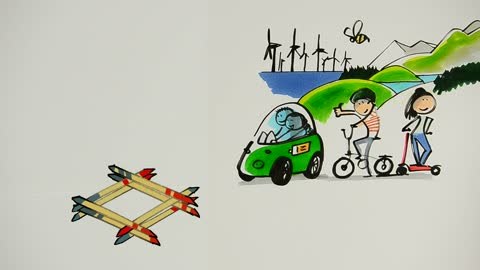
The 15-minute city

The 15-minute city — EIT Urban Mobility / UMX

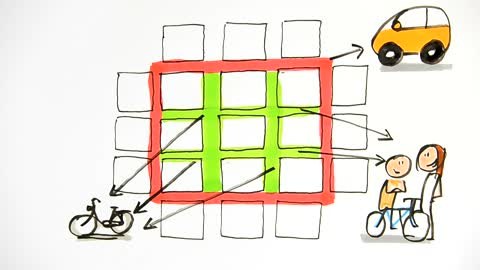
A city where everything you need is less than fifteen minutes away: it sounds like a dream.

Full synopsis

Full synopsis

A city where everything you need is less than fifteen minutes away: it sounds like a dream.

Professor Carlos Moreno imagined this concept in 2016. Cities like Paris, Rome, Utrecht, Singapore and Melbourne are already implementing it.

His vision of the 15-minute city is simple: residents must be able to access all essential services — work, education, health and leisure — in less than fifteen minutes, on foot, by bike or by other non-motorized modes of travel.

Beyond proximity to essential services, several major planning principles must be applied to create a 15-minute city.

For example, residents must be able to move freely and safely. Streets should be pleasant and easy to use for pedestrians and cyclists, regardless of ability, age or gender.

The participation of residents is essential to the success of the project: it promotes its acceptance and use.

The density of population and jobs favors the existence of local shops and services. The proximity of public transport allows residents to reach their destination without relying on a car.

Residents must also have, in their neighborhood, a varied range of services meeting their daily needs.

These characteristics should not be limited to a single neighborhood. They must be implemented gradually throughout the city, starting with experiments in the streets, so that every resident can benefit from them.

Quarter-hour cities are a complex and exciting concept. We have created a free online course on this topic. Good discovery!
ADAMO — shuttles for shows

ADAMO — shuttles for shows — ADAMO

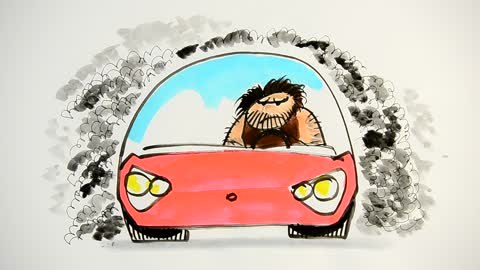
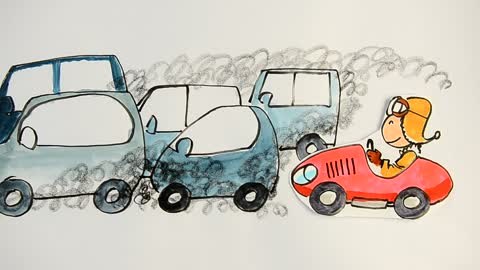
Before, to get to town, it was all car, because we didn't get home early. But that was before. Today, we can clearly see that it doesn't work, because it pollutes, it's jammed, it's impossible to park and we arrive late.

Full synopsis

Full synopsis

Before, to get to town, it was all car, because we didn't get home early. But that was before. Today, we can clearly see that it doesn't work, because it pollutes, it's jammed, it's impossible to park and we arrive late.

In short, this is not the right solution. But new means of mobility are emerging. This is the case with Adamo. It’s a shuttle system linked to your show ticket that takes you home after the show. And who can also pick you and other spectators up from your home to take you to the show on time.

It's so much simpler and more user-friendly. This service is offered to you at an advantageous rate. You no longer have parking problems or delays. And it's better for the planet. Adamo is your mobility in Adagio mode.

Use it for your show evening.

The territorial development of Walloon Brabant

The territorial development of Walloon Brabant — Le Brabant wallon

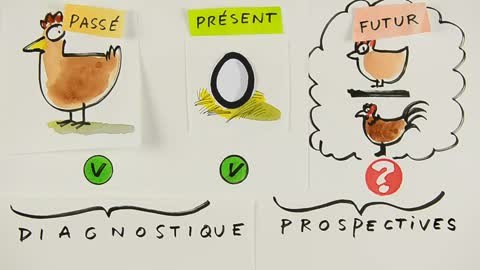
The Brabant-Wallon territorial development contract explained with an egg. The egg represents data, data that belongs to the present. The egg comes from a chicken, it is another data, a data which belongs to the past.

Full synopsis

Full synopsis

The Brabant-Wallon territorial development contract explained with an egg. The egg represents data, data that belongs to the present. The egg comes from a chicken, it is another data, a data which belongs to the past.

With this present and past data, we establish a diagnosis with the aim of being able to write prospective, speculative forecasts about the future. To make this plan, we gathered a large quantity of data from 27 municipalities, the province, studies, private actors, in short, everywhere.

The dynamism of Walloon Brabant appears in the figures for demography, economy, agriculture, tourism, mobility, equipment and resources, in the figures for health, early childhood and the elderly, education, commercial equipment, waste, connection, tics, wastewater, floods, biodiversity, landscapes, energy.

All this data on Brabant-Wallon is digitized, obviously, and available to everyone, free of charge. This provides a transversal vision and reveals opportunities and new ideas. In fact, it is a tool that allows us to bring together great projects to create meaning and success in all sectors, to build together the Brabant-Wallon of tomorrow.

Love food and reduce waste

Love food and reduce waste — Le Brabant wallon (to be confirmed)

We only think about that. We do it three times a day, that's all we talk about, all our money goes into it. What is this ? The food. Oh yes ! With 500 grams of solids, a liter and a half of liquid, that's 2 kilos per person ingested every day.

Full synopsis

Full synopsis

We only think about that. We do it three times a day, that's all we talk about, all our money goes into it. What is this ? The food. Oh yes ! With 500 grams of solids, a liter and a half of liquid, that's 2 kilos per person ingested every day.

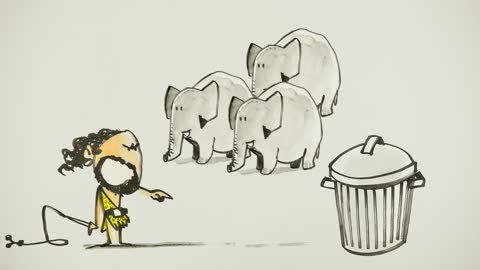
730 kilos per year. In one lifetime on Earth, a man will eat three elephants. Big ones! There are more than 7 billion of us. There will be more than 10 billion of us in 2050. And the worst part is that a large part of the food goes straight into the trash.

How do you get three elephants into a trash can? By putting a little bit in there every day. Yes, but whether you check your page once or 100 times a day, whether you read tons or whether you are a gamer addict, the planet is only slightly affected.

Whereas on the other hand, what you eat pumps. It pumps the water. It sucks energy. It pumps the air. Food is an essential issue and food waste weighs on our planet. This is a real problem. But on your level as a simple eater, the solution is beautiful because it is simple.

Love the food. Love it when you buy it. Loving it when you cook it. Prefer short circuits, local products, local shops. Run away from the wind merchants. The bonus for eating poorly. I throw it away, it's free.

This is the worst example to give. Know your fridge. Note the dates, list the purchases. Don't go shopping on an empty stomach. Plan meals. Do not let anything go into the basket. Suspect your children.

Know the quantities. Organize and ventilate the fridge. Place the old ones in front, the new ones behind. Use up the leftovers. It's delicious. Every chef will tell you that. And remember, to save money, the microwave freeze team is your friend.

Wasting less is a game. It’s quite simple. There you win. There you lose. And remember, when you win, you make everyone win with you.

Faire Bruxelles ensemble — participatory budgeting

Faire Bruxelles ensemble — participatory budgeting — Ville de Bruxelles — Faire Bruxelles ensemble

Before, the future of Brussels was decided by whoever had the key to the fund. But that was before. Today, we are doing Brussels together. Elected officials share the key and give Brussels residents the opportunity to decide on the use of part of the fund.

Full synopsis

Full synopsis

Before, the future of Brussels was decided by whoever had the key to the fund. But that was before. Today, we are doing Brussels together. Elected officials share the key and give Brussels residents the opportunity to decide on the use of part of the fund.

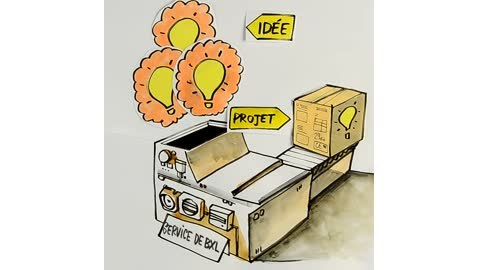
New, the participatory budget. It's what ? This means that you can, for your neighborhood, express your ideas for investing in the future. With places and spaces for meetings, solidarity or games for all.

Green spaces, equipment, mobility, ideas like that. And more to come. But be careful, to realize them, these ideas must become very real and realistic projects. And that's what we're going to do together.

Put them in the correct format. And when the required conditions are met, the projects are proposed to everyone through voting. Doing Brussels together means deciding together the future of your neighborhood, of our city.

Demand-responsive transport

Demand-responsive transport — EIT Urban Mobility / UMX

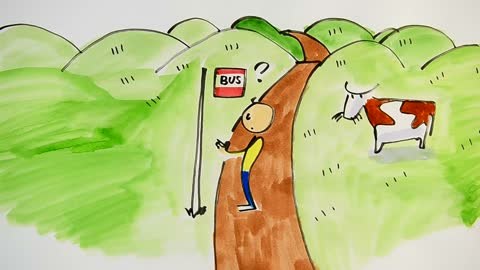
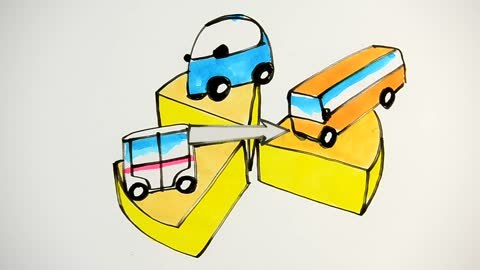
What is on-demand transportation? It is a flexible mode of transport, halfway between the bus and the taxi.

Full synopsis

Full synopsis

What is on-demand transportation? It is a flexible mode of transport, halfway between the bus and the taxi.

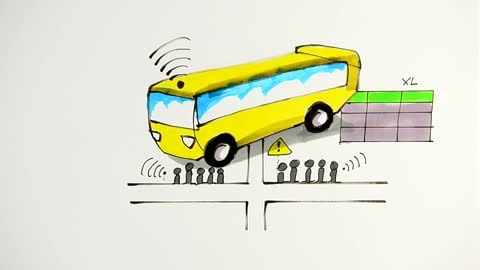
It complements public transport very well for people who travel outside peak hours or live in underserved areas. The service works on demand: you book the place and time that suits you and buy your tickets in a few moments on your phone. It’s also safer: you can wait inside until the shuttle arrives.

Operators thus avoid running almost empty buses on lines with little traffic. Smaller vehicles also emit significantly less CO₂ and reduce costs.

On-demand transportation can improve access to community services and opportunities. Companies can also organize their own services to attract new talent to places that are difficult to access by public transport.

It is particularly useful in isolated regions: it meets certain needs of an aging rural population and avoids the use of private vehicles, which represent 60% of CO₂ emissions from road transport.

A study shows that in theory, combining this service with public transport could avoid nine out of ten car journeys in an average European city.

On-demand transportation is booming. Remarkable examples can be found all over the world. We have created a free online course on this exciting topic. Good discovery!
Shared mobility

Shared mobility — EIT Urban Mobility Academy

Before, you could choose between public transport and the car: one or the other. The versatile car seemed to be the best option. But that was before.

Full synopsis

Full synopsis

Before, you could choose between public transport and the car: one or the other. The versatile car seemed to be the best option. But that was before.

Today we know we were wrong: cities have grown considerably, as have the number of cars. We now prefer the sharing economy, since everyone is permanently connected.

The individual car is no longer the Holy Grail, because shared mobility has become a reality. What we see is just the tip of the iceberg.

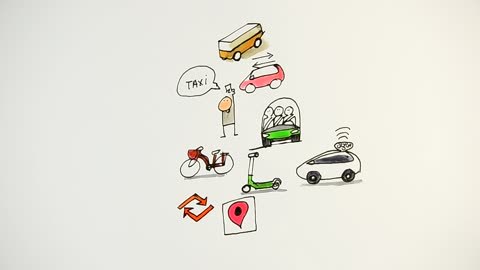
It includes public transport, car sharing, chauffeur-driven car services, carpooling, micromobility by bicycle or scooter and autonomous cars. But also the interconnection of services, navigation, billing and data that make it possible to understand and plan trips.

From long distances to the last kilometers, shared mobility is developing to become what we call mobility as a service.

It’s a vast and exciting sector. We have designed an online course to help you understand shared mobility as a whole.

Flexible curbside management

Flexible curbside management — EIT Urban Mobility Academy

Before, when we thought of public space, we often imagined a roadway, a sidewalk and parking in between. But that was before.

Full synopsis

Full synopsis

Before, when we thought of public space, we often imagined a roadway, a sidewalk and parking in between. But that was before.

Since then, the urban explosion has given rise to a new concept: roadside management. What is it about? To manage all uses of the space located between the roadway and the sidewalk. And there are many of them!

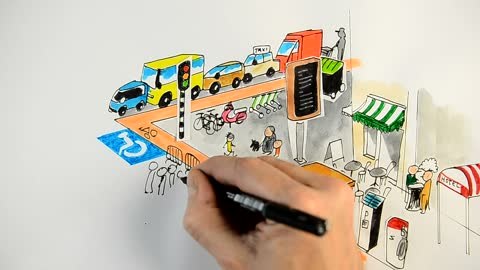
Cars with driver, buses, cars, taxis, deliveries, cycle paths, loading zones, spaces reserved for disabled people, spaces for shared bicycles and scooters, access to shops, terraces and offices.

We must think of all users: pedestrians, joggers, people with reduced mobility. But also at bus shelters, traffic lights, trash cans, parking meters, charging stations and signage. Finally, from time to time: work, cultural or sporting events, moves and events.

As you can see, this shared space is subject to strong competition. Its use has also evolved with Covid-19: online shopping and deliveries have exploded, while cafes and restaurants have set up terraces in the street.

Flexible management of road edges consists of actively and flexibly organizing the uses of all these actors. The same border can thus accommodate different users depending on the time of day or the seasons.

Today, digitalization and technology enable dynamic, real-time management. This is a vast and fascinating subject. We have created a free online course.

Rethinking city parking

Rethinking city parking — EIT Urban Mobility Academy

Before, we built cities by imposing a minimum number of parking spaces per building. But that was before.

Full synopsis

Full synopsis

Before, we built cities by imposing a minimum number of parking spaces per building. But that was before.

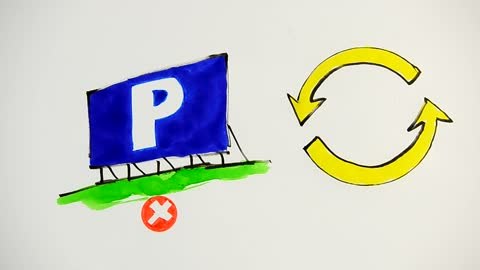
Aujourd’hui, nous savons que trop de places de parking provoquent des embouteillages, l’étalement urbain, la flambée du prix des logements et, finalement, une baisse de la qualité de vie. However, our objective, let us not forget, is good accessibility.

Parking is expensive. Parking a car requires thirty square meters, the equivalent of the living space rented by one person. This space costs more than the car itself. To be fair, this cost should be borne by its owner.

With better rules and adapted prices, we can change behavior. The solution is not to create more places, but to optimize their sharing.

Solutions like “park once and walk” can revitalize city centers. Il existe aussi du stationnement pour les vélos et les véhicules de micromobilité, ainsi que des technologies permettant aux particuliers de partager leurs places.

As you can see, parking is a vast and fascinating subject. We have designed an online course that we invite you to follow for free.

Fondation pour l’Enseignement

Fondation pour l’Enseignement — Fondation pour l’Enseignement

The future is not school, but what is to come after school. And that depends a lot on the school. Very often, we only have a very vague idea of ​​what we want to do. But since living alone on a desert island will not be possible in most cases, you might as well set out happily to discover the extent of the possibilities.

Full synopsis

Full synopsis

The future is not school, but what is to come after school. And that depends a lot on the school. Very often, we only have a very vague idea of ​​what we want to do. But since living alone on a desert island will not be possible in most cases, you might as well set out happily to discover the extent of the possibilities.

It's like a toy store. You have to choose, and it's not easy. Finding your strengths and developing them is the best thing to do to find your way and then create good relationships, personal and professional, which is essential for a balanced society where everyone finds their place.

Dynamism, technical and human skills in an activity that flourishes, this helps to guarantee our common future as citizens and socio-economic well-being. To achieve this, there are different types of education, general or oriented more directly towards a profession.

Different quality courses, which are not better or worse, but which allow you to qualify and above all to learn to continue learning throughout your life. Business question, we must ensure a good deal between the company and the young person, between what it brings and what brings it.

Whether in small, large, private, public, commercial or social purposes. So in many sectors of activity and as workers, employees, civil servants, independents, associates. It’s vast and each profession is important for our society.

The Education Foundation brings together all those responsible for compulsory education and businesses in the Wallonia-Brussels federation to facilitate the meeting between school and business. She proposes changes and above all, she does concrete things on the ground.

Like strengthening the links between teachers and the company. Discover the diversity of professions in support of student guidance. Develop an entrepreneurial spirit. Encourage the societal contribution of businesses.

Do you also think that quality teaching is key? Would you like to support us and join our efforts? Owl ! Contact us!

Food n’Joy — company presentation

Food n’Joy — company presentation — Food n’Joy

Here is another story: that of our company. A story that is based on the taste of good food.

Full synopsis

Full synopsis

Here is another story: that of our company. A story that is based on the taste of good food.

In 2012, Arnaud took over Food n’Joy with the idea of ​​another development model. A looping development, which starts from one point and returns there, like a forest which grows constantly while maintaining the same size.

A development where the main thing is to maintain, year after year, the same product quality and the same inventiveness. But also to preserve the quality of the entire ecosystem, by saving and reusing the resources accumulated by the planet.

This development is opposed to linear or exponential growth, where the objective is always to produce more and where the result is only measured in euros.

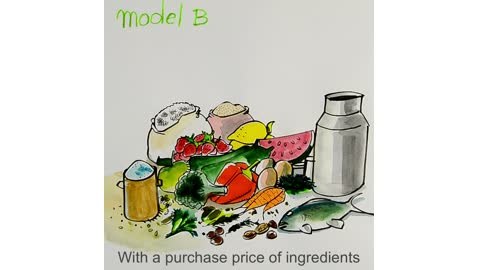
At Food n’Joy, the producers are mainly local. The quality of the ingredients and their impact on nature are taken into account, with a purchase price in line with these requirements. In the other model, pressure on prices and globalization serve to reduce costs, to the detriment of quality and the planet.

Preserving the quality of our products requires constant innovation. This requires creativity, a lot of creativity. It comes from the entire team, in a flat organization that respects people. This is not the case with mass production, where standardization is the rule and dehumanization spreads.

Our relationships with our customers, present in more than thirty countries, are based on taste and trust: always impeccable product quality, which does not harm the health of those who eat it. This is very important. They are also based on values ​​that go in the direction of a sustainable world.

This is what we seek and which ultimately brings happiness, wealth and pleasure.

ISoSL — prepare and deliver children's meals

ISoSL — prepare and deliver children's meals — ISoSL

How to feed 3000 children every day? Every day, ISO SL produces and delivers 3,000 meals to children in the Liège region. Initially, there is the choice of balanced menus provided by our dietician Kelly. Then, purchases by Sabine, Yvette and Pierre in the kitchen.

Full synopsis

Full synopsis

How to feed 3000 children every day? Every day, ISO SL produces and delivers 3,000 meals to children in the Liège region. Initially, there is the choice of balanced menus provided by our dietician Kelly. Then, purchases by Sabine, Yvette and Pierre in the kitchen.

With vegetables, fruits, fish, eggs, quality products, and pasta, flour, rice, which come from the region, when possible. And also, organic products, increasingly and from short circuits.

We would like there to be even more, we signed up for that, because we like it. Quality products purchased at the right price. Safe and above all delicious products. Jean's team will cook all that up, with ideas like that, but practices like that.

Perhaps the best soups are made in old pots, but ours are more like that. Because managing community power is a real responsibility which is carried out under the high control of AFSKA.

And that’s no laughing matter! These cooked meals are distributed in two different ways. We'll see why. First there is the hot connection. Once cooked, the ingredients can never fall below 65 degrees.

And this, from the morning, when they are cooked, until after midday, when they are served on a plate. Hot is what guarantees, in addition to taste, food safety. And it's no easy task to keep warm.

We isolate the cargo and then we rush. Oh ! And that's how it is, every day. It works well, yes, but only for large quantities and for uniform meals. In short, for schools. Then there is the cold link.

There, the meals cooked in the kitchen must drop very quickly below 10 degrees and stay there. We have cold rooms and small refrigerator vans for that. Cold meals are only heated just before being served.

The rations are served in trays designed to be heated. Recyclable trays, which are recycled. The cold connection is essential because it allows individual, tailor-made rations to be made, taking into account specific diets, different age groups and allergy problems, and adapting to the schedules of little ones.

All this with perfect food safety. Lots of differentiated rations for many small structures to deliver. In short, cold is the solution for nurseries. And this allows ISO SL to truly participate in the fight against food waste, which is a real issue for our society.

And this is how every morning, we cook and deliver meals to the communities. We are a public service, not a food industry. Which means that we do not work with a purchase price, a sale price, the aim of which is to make a profit for the shareholder.

But with a public mission to carry out. Guarantee access to food quality, at a price accessible to all. All this within the limits of a budget which ultimately comes from everyone's pocket. It's a job that we love and that we try to improve over and over again.

Do you have any positive ideas to improve things? We're always looking for more! Email us at idpositives.isosl.be

The ISO 16128 standard and organic cosmetics

The ISO 16128 standard and organic cosmetics — Léa Nature — SO’BiO étic

The ISO 16128 standard explained it to those who don't particularly want the long version. Organic cosmetics is booming. For what ? Because today we all want healthy products, a planet and a life, like this and not like that.

Full synopsis

Full synopsis

The ISO 16128 standard explained it to those who don't particularly want the long version. Organic cosmetics is booming. For what ? Because today we all want healthy products, a planet and a life, like this and not like that.

Creating an ISO standard for organic and natural products seems like a good idea, with those who know, the experts, those who do it, the manufacturers of organic cosmetics. And those who would also like to do so, the conventional cosmetics manufacturers.

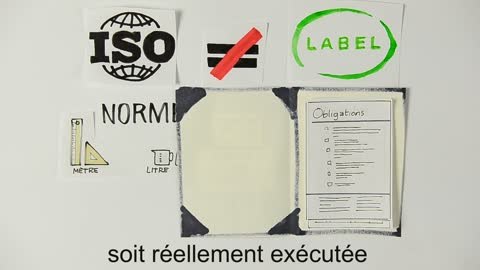
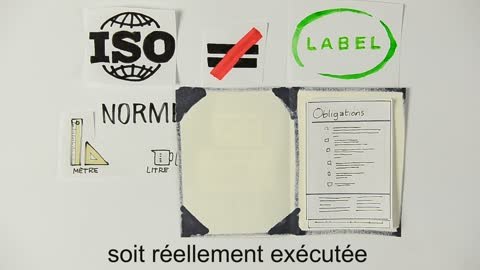
But be careful, ISO is not a label, it is a standard, not the same thing at all. The standard qualifies something, period, it is a tool. The label is there to certify, to guarantee that an idea, organic, natural, is really executed, without cheating.

The ISO standard defines what is organic and what is natural, but not what a so-called natural cosmetic actually contains. Thus, a cosmetic can display a percentage and speak of natural cosmetics, while incorporating ingredients suspected of being harmful to health.

That's nonsense, that's not a good idea at all. The risk with that is mixing on the shelves, true organic, not organic, a little organic, in short, mixing to make it illegible, so that doubt sets in. And let the good old days of bling bling marketing return.

The organic project is a commitment of people who love people, health and the planet. With the ISO standard, there is the risk that some will make sales by riding on naturalness. Like kids trying to get stuff into the cart.

We must remain vigilant. Marketing stuff is no longer what works, because frankly, it's no longer what we want. How to find the right products? Trust the labels and certifiers who do real certification work.

And for those who want the long version of the matter, it's here.

Martin and the GASAPs

Martin and the GASAPs — Le Réseau des GASAP

Today, there is a new guy who arrived at school. His name is Martin. He is different. He has pretty, very long hair, with curls. There are some who say it's a boo-boo. I too find it beautiful. He says that because he comes with his mom in a weird bike, like a piano.

Full synopsis

Full synopsis

Today, there is a new guy who arrived at school. His name is Martin. He is different. He has pretty, very long hair, with curls. There are some who say it's a boo-boo. I too find it beautiful. He says that because he comes with his mom in a weird bike, like a piano.

And then, he eats eco-friendly. I asked him what he was eating. He told me that his vegetables came from a farmer he knows personally, who even gives him a kiss when he goes to the farm and that her name is Léa.

But they don't go there often. They pick up the vegetables in the street behind the school, where there is the big bridge, at WhatsApp. It's not just them who go there. Camille and Liam's parents are going there too.

On the farm, he can see his vegetables that are grown just for him. But it's just for fun. In reality, that means that they signed up for Léa's agricultural production for a year. It's like at school. Before you come, you have to register and so the teacher knows you will be there and she can prepare all the class work for the year.

Being a teacher is her job, which she does to earn money. Well, Léa, it's the same. But I find it hard to believe what Martin is telling me. Because if it was that good, I don't see why we wouldn't do it.

Mom, she says that everything we buy comes from the other side of the world by boat anyway. And that you shouldn't believe what he tells stories because it's a matter of money and you can't exchange anything.

And then it annoys her and she says that Greta, she would be better off going back to school. It’s true that our races must come from very far away. I'm thinking of Santa's land. Because it's often frozen food.

And it's wrapped like Christmas presents with photos that show the food inside. We do our shopping in a store which is on the highway, where there are lots of cars in front. And we really take a lot from the cart because there are always the most ungrateful ones.

This way, we save money. I talked to Dad about Martin and it made him laugh a lot. However, afterward, Dad spoke with Liam's parents. And then, when he came back, he had a big smile. And he told me that we too were going to have WhatsApp vegetables.

But you have to say Gazap to be correct. Solidarity purchasing group for peasant agriculture. He told mom that we were registered and that we were going to cook seasonal vegetables from home. And then also, I had to see chickens and carrots in real life and not just on television.

And if it falls, I've never seen a cow in real life before. That's not true. But I didn't tell him that because I rather like going to see the cows on the farm with Martin. Mom, she immediately thought it was cool.

She said that the Gazap were revolutionary. And then, lots of other stuff that I didn't really understand, but it seemed very positive. I think that deep down, she doesn't like super department stores. Especially since he repainted himself all in glass to look like he did.

She also thinks it's important that Léa can earn a living like us. I'm so happy to go there on Sunday.

The tram in Neder-Over-Heembeek

The tram in Neder-Over-Heembeek — Ville de Bruxelles — Faire Bruxelles ensemble

Connect Nader Overhundbeek, to the center of Brussels, in one go. A tram line, direct, sustainable, comfortable, accessible to all. A tram line which will benefit current traffic and all forms of mobility.

Full synopsis

Full synopsis

Connect Nader Overhundbeek, to the center of Brussels, in one go. A tram line, direct, sustainable, comfortable, accessible to all. A tram line which will benefit current traffic and all forms of mobility.

This project is in progress. The route is found. It is now the development choices that must be made. And that's the reason for this little video. For what ? The creation of the tram and NOH is done with everyone involved.

This is a first. This means that the project is managed by a team in which we of course find Brussels City, the municipality, Brussels, the region, STIB, specialists in mobility, planning, security, but also these 8 places still available.

Here, to welcome the panel of citizens in daily contact with the tram and NOH. Want to be part of it? Participate. You, directly, or by proposing someone, or by sharing this video, is also good. Ultimately, the more candidates there are, the greater the chance of seeing your point of view represented.

Introduce yourself as a candidate or suggest candidates of your choice on www.fairbruxelles.be slash tram

Geneva — the first Young Seniors Open Space forum

Geneva — the first Young Seniors Open Space forum — CAD à Genève

That night, Pierre the baby boomer does not sleep, too excited. Tomorrow, he presents his idea, to lots of people who will listen to his idea. Something hot, but a guy who talks, the others who listen, we know.

Full synopsis

Full synopsis

That night, Pierre the baby boomer does not sleep, too excited. Tomorrow, he presents his idea, to lots of people who will listen to his idea. Something hot, but a guy who talks, the others who listen, we know.

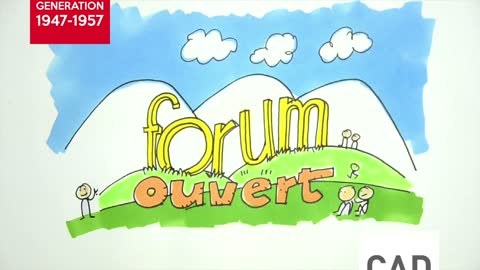
For the CAD, on October 11 and 12, it will be the first open Young Seniors forum in Geneva. You propose topics, you choose your workshops, you take action. You come with those you like. You have ideas like that.

She has ideas like that. Him, like this. They, like that. This, this, this, even this. You have no ideas. You have too many ideas. You see how to do it or not at all. Your ideas, your desires, your projects, so that Geneva gives a place to the Lord.

Not a place like that, but like this. Born between 1947 and 1957, Pierre can come. Are you there on October 11 and 12? Yes, maybe. Cool ! ...

A short history of short food supply chains

A short history of short food supply chains — Le Réseau des GASAP

A short history of short food supply chains. The basics: we were born here, on fertile land. The forests, plants, crops, calves, cows, pigs and poultry around us bear witness to that. We were born in a rich country. Not rich in everything, perhaps, but there is plenty of water.

Full synopsis

Full synopsis

A short history of short food supply chains. The basics: we were born here, on fertile land. The forests, plants, crops, calves, cows, pigs and poultry around us bear witness to that. We were born in a rich country. Not rich in everything, perhaps, but there is plenty of water.

With all this, farmers provide us with delicious food, produced here and in season. It all happens within a short supply chain: you can cycle around it.

Yes, but… here comes the crafty operator. As things developed, these operators arrived with calculators, diaries and lots of money. They introduced new cards into the game, which they call the market, allowing it to be played by different rules.

So there are two ways to play: a simple one and a complicated one. In the simple version of farming, the farmer produces food and incurs costs. The person eating it buys the produce at a price that covers those costs and pays the farmer a wage.

They are interdependent: they support one another. That is a good thing. In the complicated version, the market enters the game, and it wants to make a profit.

With enormous piles of money, these operators buy enormous quantities from enormous farms and sell them through enormous networks of shops with enormous car parks. Their aim? To dominate the market. Now they make the rules.

Whoever dominates the market sets the prices. This is not mutual support or solidarity: it is about profit. The purchase price does not cover production costs here, but that does not bother them. The selling price, however, is increased to finance promotions such as ‘buy two, get one free’.

All of this stops us looking elsewhere. It makes us think we have no choice. But we do: short food supply chains. Today, people who want to change things are returning to them.

That means buying food without an intermediary: at the farm, at the market, individually or through a GASAP — a solidarity purchasing group supporting small-scale farming. These are groups of consumers who commit to supporting a local producer and buy a vegetable basket every week.

The producer, in turn, commits to supplying local, organic, seasonal vegetables. Wonderful! These short food supply chains form small bubbles which, together, become a real force: an alternative to the crafty operators.

A breath of fresh air that lets farmers earn a living from their work.

Agladys — electronic voting

Agladys — electronic voting — Agladys

Before, we had the boss who knew, and the others who kept silent. And then boss fights, but that was before. Today, in businesses, as in civil society, we will more and more often prefer to involve everyone in the decision-making process.

Full synopsis

Full synopsis

Before, we had the boss who knew, and the others who kept silent. And then boss fights, but that was before. Today, in businesses, as in civil society, we will more and more often prefer to involve everyone in the decision-making process.

Because participation in decisions brings support. But the organization of physical elections is expensive, complicated, it is not an easy task. Electronic elections are much simpler to organize.

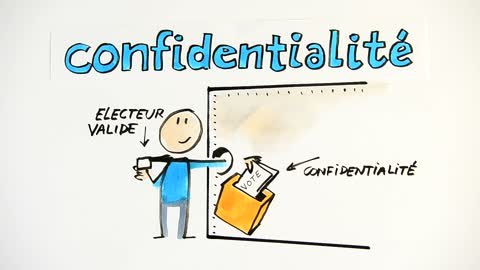
But computers are gossipers. And particularly with the Internet, computing leaves traces. However, to have an election with indisputable results which provide legitimacy to the vote, we must be able to guarantee the confidentiality of the vote.

That is to say that we do not know who voted for whom, but keeping all the guarantees on the validity of the voters. This is what Egl said 6 votes allows thanks to 15 years of research in cryptography. The globally recognized expertise is one of the only technologies to meet the high requirements of the Council of Europe in terms of electronic voting.

Agladis e-vote makes it possible to organize ballots that are truly accessible to all voters, which gives legitimacy and visibility to the election, while the voter will only see a simple and crystal clear interface, which simplifies the organization of elections and promotes an ever more participatory society.

THINGS — develop applications without programming

THINGS — develop applications without programming — Projet THINGS

Before, to develop a tailor-made IT application, you needed vision, fieldwork, project management and programming. Then there was back and forth, back and forth, back and forth. Which takes time.

Full synopsis

Full synopsis

Before, to develop a tailor-made IT application, you needed vision, fieldwork, project management and programming. Then there was back and forth, back and forth, back and forth. Which takes time.

It's complicated and it's difficult to get what you want. And for each modification, you have to program again. It's long and therefore expensive. But good news, that was before. Today we present to you Things.

This is our robot and its toolbox. And this time, around the table, it's just you, us and Things. Who, being the good robot he is, can do simple things, but also complicated things. No need to program anymore.

This allows you to carry out an application around a table and then improve it in the field. It takes a few days. The return on investment is rapid. How easy it is for modifications, no need for us.

Little revolution. Things is so effective that after the first exchange, we already present you with a prototype. Let's meet!

Urban air mobility

Urban air mobility — EIT Urban Mobility / UMX

Today, drones make us think of photography enthusiasts and, unfortunately, military operations. But urban air mobility, or UAM, covers many other uses.

Full synopsis

Full synopsis

Today, drones make us think of photography enthusiasts and, unfortunately, military operations. But urban air mobility, or UAM, covers many other uses.

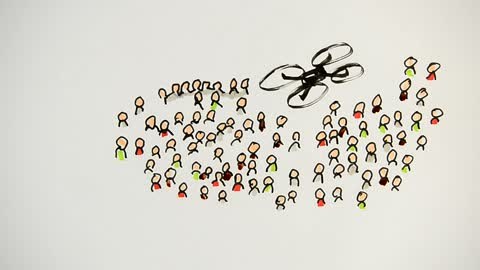
Delivering defibrillators, dropping life jackets at sea, monitoring fires and crowds or inspecting structures: the applications are numerous. And major developments are expected in the very near future.

Today, drones are used for surveillance and, in some cases, transportation. Soon their commercial use will expand in logistics. Later they will transport people. Test flights are already being planned for the 2024 Olympic Games.

Urban air mobility is an exciting sector of development, but it also poses many challenges: regulation, safety, public support, technology and environment.

We have brought all these aspects together in a free online course. Good discovery!
ULB Santé — taking action for health

ULB Santé — taking action for health — ULB Santé — Université libre de Bruxelles

Oh, you who come to ULB to follow one course or several! Yes, you! You know, of course, that you are free to choose from an Alibaba-esque choice the training and knowledge that you will acquire and which will end up packaged in a nice diploma upon exit.

Full synopsis

Full synopsis

Oh, you who come to ULB to follow one course or several! Yes, you! You know, of course, that you are free to choose from an Alibaba-esque choice the training and knowledge that you will acquire and which will end up packaged in a nice diploma upon exit.

You know that! But as there is nothing more regrettable than being smart but sick, the ULB gives all students, and whatever the course chosen, knowledge to protect their health capital. How ? Information, training, action, awareness.

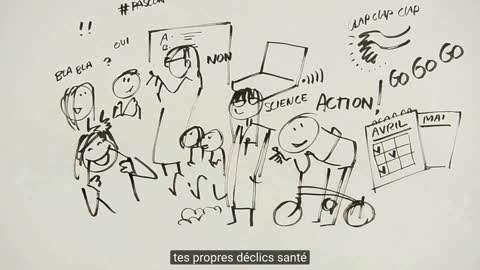
A host of tools for you to catch the health triggers. The “There, I’m not going there” click. The “Never without you” click. The “I’m moving” click. The trigger “Too much, I owed you, eh”. The “Let’s stay together” click.

The “Good food” and “Big sleep” click, as well as many others. ULB teaches you how to program your own health triggers. It's great! Too good!

The fabulous story of UTick

The fabulous story of UTick — UTick

The fabulous story of uTik. Before, Fred, who manages shows, worked with a prehistoric PC, ringing phones, paper, envelopes, stamps and an old printer that was too often jammed. The online ticketing was no longer up to date at all. And André, IT, is expensive and it doesn't work anyway.

Full synopsis

Full synopsis

The fabulous story of uTik. Before, Fred, who manages shows, worked with a prehistoric PC, ringing phones, paper, envelopes, stamps and an old printer that was too often jammed. The online ticketing was no longer up to date at all. And André, IT, is expensive and it doesn't work anyway.

As a result, spectator data is locked in the program and can no longer be retrieved. But that was before. Before this evening when Fred thinks and says to himself but but but and Julien, show organizer and developer, enters the court and he replies but but that's of course the big idea. They are on cloud nine, they have just invented uTik.

The ticketing solution created from the boards for the boards. A single application in the cloud for all performance halls and therefore 24-hour maintenance. Free day and night updates. Top, safe and eco-responsible servers and this time your data is yours and only yours and always directly downloadable. You respect the GDPR. With uTik, the hell of the telephone exchange ends. For the spectator, it's a dream. Reservations can be made anywhere at any time.

And for the organizers, the situation of the show is displayed in real time. Tickets are issued in PDF, mobile or paper version. Between you and the spectator, there is no longer an intermediary. And when profits rise, your costs remain fixed. The show is connected with a number of services. Carpooling, childcare, dinner, exchange, but above all subscriptions and passes. Oh that's good. And that too, always at no additional cost. And then? Well then, you can for example join the performance halls which work with uTik for their ticketing. Welcome !

Vias — supporting mobility policy

Vias — supporting mobility policy — Institut Vias

When your mobility needs are simple, the solutions are too. But today’s mobility is complex and demanding.

Full synopsis

Full synopsis

When your mobility needs are simple, the solutions are too. But today’s mobility is complex and demanding.

It has become an ecosystem in its own right. Each decision must take into account an overall balance. It’s about not making mistakes: ultimately, it’s our future that’s at stake.

This is why Vias offers Mobi Journey, with modern solutions for all your mobility questions. Vias supports you in many challenges: improving the accessibility of your site, introducing the mobility budget, encouraging people to change the way they travel and adapting your fleet to make it smarter, greener and reduce accidents.

Mobi Journey helps you implement a future-oriented mobility policy, with tools adapted to the needs of your organization. Everything is done to help you build the mobility of tomorrow.

Contact our team and find out what Mobi Journey can do for you.

What is a woonerf

What is a woonerf — EIT Urban Mobility / UMX

What is a woonerf? The word roughly means “yard to live in”. This concept was born in Delft, in the Netherlands, in the 1960s, in reaction to the central place given to the car after the economic boom.

Full synopsis

Full synopsis

What is a woonerf? The word roughly means “yard to live in”. This concept was born in Delft, in the Netherlands, in the 1960s, in reaction to the central place given to the car after the economic boom.

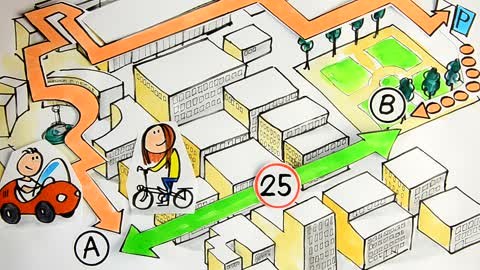
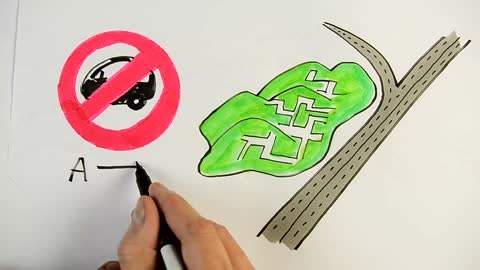
These cars caused traffic jams and accidents, and made the streets unlivable. Woonerven are safety islands designed for residents, rather than for traffic passing through the neighborhood from point A to point B.

On usual streets, the car takes up the majority of the space. You must therefore constantly monitor your children. This is not the case in woonerven.

We can again chat with our neighbors, play ball, make music, sit on a bench or in a circle with friends, draw with chalk, ride a bike, eat outside.

Here, people come before cars. Cars must adapt to the speed of pedestrians: the streets are designed for this. The space is re-appropriated naturally. Traffic becomes more human and coexists with soft mobility. The streets become public spaces again.

The woonerf is now part of the DNA of the Netherlands. This is a fascinating topic that deserves to be explored. So we created a free online course. Good discovery!
Agroecology explained to children

Agroecology explained to children — The Greens / European Free Alliance

Agroecology explained to children. Parents can watch too. Don't worry, it's allowed!

Full synopsis

Full synopsis

Agroecology explained to children. Parents can watch too. Don't worry, it's allowed!

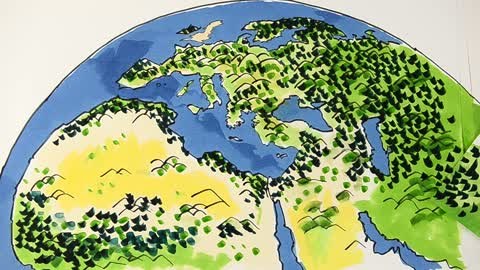
Agro-eco-logy: “agro” is agriculture; “logy” is to think; and “eco” is your home. In other words, the planet. It is an agriculture that works with nature, as opposed to agro-industry, which seeks to extract the maximum.

How does industrial agriculture work? It exploits natural resources intensively, on a very large scale. It seeks to produce uniformity and stability: always the same thing, at the same pace, en masse and constantly.

The problem is that this goes against living things, which are diverse and capable of adapting to their environment. To produce this on an industrial scale, we take a variety, we make it uniform and stable, then we create immense uniform monocultures.

This wouldn't work without chemical fertilizers and pesticides. And these are sold by the same big companies that sell the seeds to farmers. Pardon the pun, but this is all a bit fishy!

This process transforms farmers from guardians of the land to people who sterilize it. The earth produces, but in the long term it loses its natural functioning.

Global agriculture then looks like this: patents, shares on the stock market, dependence on chemical inputs and pressure groups that push ever more in this direction. That's where the profits are. Frankly, it's revolting. This is not good for us, for food, or for the planet.

Fortunately, what was our past does not have to become our future. Today, this agro-industrial model is outdated, because we share a simple idea: we do not have a second planet. It's the only one we have. We therefore prefer agroecology: producing our food by working with nature rather than against it.

This is why we invest in the creation and protection of biodiversity. It is a resource that helps farmers grow and protect their crops. High biodiversity, living soils, insects and other useful species ensure long-term fertility and productivity.

This system allows us to stop fighting nature and work with it. And when the rules evolve to favor agroecology, it works. It’s better, and it creates many real jobs and livelihoods.

Biodiversity helps farmers live decently by strengthening natural processes. Not just in one place, but in every country. This is true here as elsewhere.

To achieve this, we must put an end to intensive monocultures of industrial raw materials dependent on chemical inputs. In other words, stop working with companies that want us to use chemicals that are bad for nature and for us.

By leaving this system, we can replace it with agriculture that is economical in inputs, respectful of nature, which feeds populations and adapts to climate change. This is an essential issue that concerns us all.

It’s a great solution, effective for feeding everyone. Agroecology: working with nature, not against it. And also create links and cooperate with nature as well as with others.

The Colibri project

The Colibri project — Le Brabant wallon

Kyoto Protocol, Paris Agreement, Green Deal, everyone is involved. Reducing emissions is now. And as a school, a business, a provincial administration, we must be exemplary. In Walloon Brabant, we went to see Professor Colibri to ask him for a plan.

Full synopsis

Full synopsis

Kyoto Protocol, Paris Agreement, Green Deal, everyone is involved. Reducing emissions is now. And as a school, a business, a provincial administration, we must be exemplary. In Walloon Brabant, we went to see Professor Colibri to ask him for a plan.

Let's take the provincial administration of Walloon Brabant. It releases 113,000 tonnes of CO2 per year. To give you an idea, a ton is a Brussels-New York flight. Colibri's goal is to achieve at least a 12% reduction by 2030.

And to achieve this, it requires, above all, the involvement of everyone. This is why it is crucial to do everything possible for the success of a Colibri plan. How ? Some examples. 1. Purchase. Choose providers who are committed to the green side of the force.

Consider including environmental clauses in your calls for tenders. 2. Zero waste. Here too, promote waste-free purchases. Sort and recycle waste. Check available stock before purchasing. 3. Sustainable diet.

Introduce dishes prepared from local and sustainable products into your canteen. Train your kitchen staff. 4. Mobility. Promote active mobility. Adapted parking, cycle path, shower. Offer carpooling and cycling allowances to get to work and for business trips.

5. Energy. Isolate and replace energy-intensive heating. Optimize surface use. Learn anti-waste actions. 6. Green IT. Move towards greater digital sobriety through training and optimization.

7. Create an eco-team to find more ideas and get involved personally. Here are a few examples, but the most important thing to remember is that it is all the small individual or collective gestures that will make the difference.

Your participation is therefore welcome. A flankolibri is above all unconditional support for all behaviors that will help us reduce our carbon emissions at home, at school, at work. And already, thank you in advance for 2030.

ULB — accounting and orders

ULB — accounting and orders — ULB — Département de l’administration financière

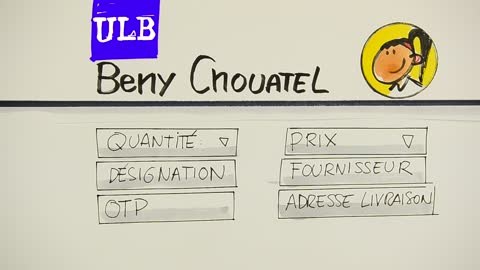
March 23, 2020, Benny Chouattel is at the party. It is a yes for the organization in Brussels of the famous conference for which she has been fighting for more than a year. Now, we have to do it quickly and well, order services, order goods, without making a mistake, on the right terms, without tons of paperwork, respecting the account budget and, overall, strengthening the ULB as a purchasing force.

Full synopsis

Full synopsis

March 23, 2020, Benny Chouattel is at the party. It is a yes for the organization in Brussels of the famous conference for which she has been fighting for more than a year. Now, we have to do it quickly and well, order services, order goods, without making a mistake, on the right terms, without tons of paperwork, respecting the account budget and, overall, strengthening the ULB as a purchasing force.

But fortunately, as we have said, we are in 2020 and now, accounting at ULB is happening like this. For each order, Benny will create a PO, with P as good and O as two orders. The PO is generated via the user account, which allows everything to be done except errors.

Benny can order in real life, on platforms, sometimes with a special ULB price, or as usual. That's right. It's great. The difference is enormous. When Benny creates a PO, she gives a valid purchase order, which is recognized at speed C, by the big accounting server.

Or at ASAP speed, if it is a purchase of more than 1500 euros. Then, at 30 days, invoice date, the buyer-seller-payer triangle closes. On time, without errors, without conflicts, with good conditions for the ULB and the smile of the dairyman.

And like that, everyone can be relaxed, max, immeum.

Dysosmobacter — a discovery about the microbiota

Dysosmobacter — a discovery about the microbiota — Client to be confirmed

A car that comes off the production line is complete. She has all her pieces. It's true. A baby in the maternity ward too? No, that's not true.

Full synopsis

Full synopsis

A car that comes off the production line is complete. She has all her pieces. It's true. A baby in the maternity ward too? No, that's not true.

It is missing parts that will only arrive later: bacteria. They are very small, very numerous. Our body is home to a hundred thousand billion of them. They are alive and are not, strictly speaking, part of our person.

However, they live in us and form the equivalent of an additional organ: the microbiota. Very real, with a weight comparable to that of our brain, it is often called our second brain.

The microbiota is found in our intestines, rather towards the end, where it provides many vital functions: immune, digestive, physiological. We live in symbiosis with this stranger.

One hundred thousand billion bacteria, two-thirds of which are still unknown to us. Only recently have researchers begun to understand some things about this mysterious companion.

Professor Cani’s team is participating in this effort. She discovered a new bacteria: Dysosmobacter welbionis.

How do you discover a new bacteria? We simply collect a stool sample immediately after it leaves the intestine. Yes, in the laboratory. For this research, each member of the team gave a little of themselves.

A sample contains a lot of bacteria. If a bacteria were a card and the sample was a deck of cards, the pile would be this height. It is therefore necessary to divide, divide again, or dilute, to end up obtaining a single isolated bacteria. It is then cultivated to obtain the desired number of copies.

We then try to read its genome. If the bacteria were a car, the genome would be the vehicle's papers in the glove box: the bacteria's information.

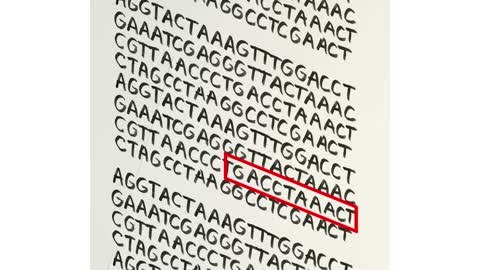
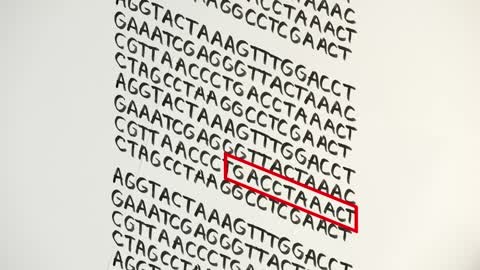
Thanks to this object which resembles a small household appliance, a sequencer, a machine which revolutionizes science, we were able to very quickly read the code of its DNA. You know, this code written with only four letters.

Using computers and databases around the world, this code is then compared to all those that are already known. If it doesn't match anything known, bingo! This is the discovery of a new bacteria. We can give it a little Latin name and include it in the world directory.

It's good, but it's not the most extraordinary. What we're really looking for are bacteria that could be useful to humanity. This is the case of the one that interests us here.

It is also not that rare: 70% of the population has Dysosmobacter in the intestine, but it is almost absent in obese and diabetic people.

Surprising fact: by giving this bacteria to obese and diabetic mice, researchers improved their health. This is excellent news. This was the objective of this research, which is now bearing fruit.

Humans have always sought to expand their knowledge. Some go to Mars to analyze samples. But sometimes, it is much closer to us, in our stools, that we find knowledge that we hope will one day help humanity. THANKS.

Graine de Vie — biodiversity and reforestation

Graine de Vie — biodiversity and reforestation — Graine de Vie

welcome to planet earth in 2020 you would have come just a little earlier we would have had a lot more diversity to show you we have entered the Anthropocene the moment when an animal species can single-handedly modify the fate of the planet and today it has already wiped out half of the marine life half of the primary forest there saying two madmen see immense expanses of forest going up in flames and he decides to replant he creates an NGO seeds of life and it works no in fact it doesn't work at all where they planted trees the following year there is nothing more while yet during this time everywhere on earth it disingues it disingues in small ones in large ones in gigantic ones sometimes a single match is enough but why is it so easy to deforest is so difficult to replant and well for three reasons the money the money the money after having cried all the tears of their bodies over this sad reality our two heroes say to each other if money works so well to deforest why not not use it to reforest and that is what they are going to do with this principle we here we really emit too much co2 we must reduce our emissions and we must also compensate them we need both to compensate we must replant trees but they must also stay replant the planet has become the mission of seeds of life a fight against deforestation where all blows are allowed for example in our country a tree absorbs this of co2 and in madagascar this and in addition it costs 50 times less grain of life therefore decided to settle in madagascar where the primary forest is in great danger and the population also seeds of life finances nurseries which provide jobs for women the trees are given to the Malagasy people who become owners half of them are cash trees that means that they bring in income and participate in economic activity the money and yes but it is for this reason also that they will still be there next year and for the other half they are forest trees that will repair the forest at home

Full synopsis

Full synopsis

welcome to planet earth in 2020 you would have come just a little earlier we would have had a lot more diversity to show you we have entered the Anthropocene the moment when an animal species can single-handedly modify the fate of the planet and today it has already wiped out half of the marine life half of the primary forest there saying two madmen see immense expanses of forest going up in flames and he decides to replant he creates an NGO seeds of life and it works no in fact it doesn't work at all where they planted trees the following year there is nothing more while yet during this time everywhere on earth it disingues it disingues in small ones in large ones in gigantic ones sometimes a single match is enough but why is it so easy to deforest is so difficult to replant and well for three reasons the money the money the money after having cried all the tears of their bodies over this sad reality our two heroes say to each other if money works so well to deforest why not not use it to reforest and that is what they are going to do with this principle we here we really emit too much co2 we must reduce our emissions and we must also compensate them we need both to compensate we must replant trees but they must also stay replant the planet has become the mission of seeds of life a fight against deforestation where all blows are allowed for example in our country a tree absorbs this of co2 and in madagascar this and in addition it costs 50 times less grain of life therefore decided to settle in madagascar where the primary forest is in great danger and the population also seeds of life finances nurseries which provide jobs for women the trees are given to the Malagasy people who become owners half of them are cash trees that means that they bring in income and participate in economic activity the money and yes but it is for this reason also that they will still be there next year and for the other half they are forest trees that will repair the forest at home

Last mile logistics

Last mile logistics — EIT Urban Mobility / UMX

Goods and services are generally produced outside of cities. The trucks that transport these goods are large, but the streets are often narrow.

Full synopsis

Full synopsis

Goods and services are generally produced outside of cities. The trucks that transport these goods are large, but the streets are often narrow.

The logistics of what we call the last mile are therefore essential. This is the last step in the supply chain, the one that takes the goods to their final destination.

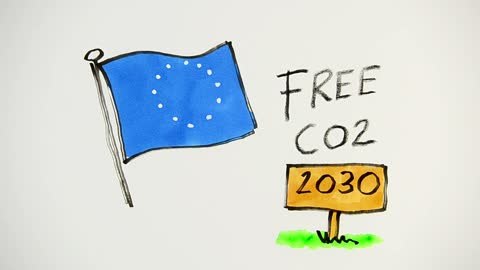
The demand for deliveries is constantly increasing, as is their carbon footprint. The European Commission's objective is urban logistics without CO₂ emissions by 2030.

To optimize deliveries and achieve this objective, we can apply the four A’s method.

Raise public awareness, using cost calculators and labels that make the carbon footprint of a product visible. Avoid empty journeys by consolidating deliveries, using logistics microplatforms and parcel lockers.

Take action and change your mode of transport: use waterways and rail. Cargo bikes alone could provide 25% of deliveries. Finally, anticipate new technologies and explore what electrification and other innovations can bring.

To implement this method, it is essential to take into account the needs of the different stakeholders and obtain their participation. This is the fifth A of urban logistics: the involvement of stakeholders.

The last mile is a major challenge for mobility. It is still one of the highest emitting sectors of urban transport, but it could become one of the most sustainable.

It’s a fascinating subject. You can learn more with our free online course. Good discovery! THANKS.
Mobility data

Mobility data — EIT Urban Mobility / UMX

Urban mobility is a major challenge, complicated by population growth and the climate crisis. Better understanding travel flows is therefore fundamental for transport planning professionals.

Full synopsis

Full synopsis

Urban mobility is a major challenge, complicated by population growth and the climate crisis. Better understanding travel flows is therefore fundamental for transport planning professionals.

It’s not just about people who travel by bike, on foot, by car or by metro. Online commerce also generates many truck and van trips.

Thanks to new technologies, each trip produces a large amount of data. This is what we call mobility data.

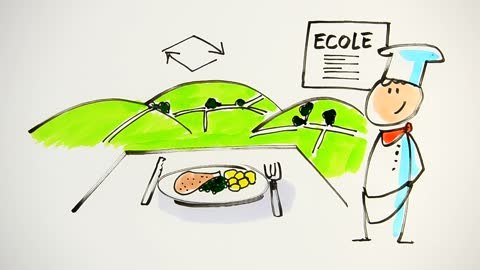
You produce it when you validate your transport ticket, by the geolocation of your phone and its connections to mobile antennas, by the navigation system of your car, or even by cameras and sensors installed in public spaces and along the roads.

All this data contributes, in different ways, to better organizing transport.

Urban planning: They provide an overview of needs, which helps to develop overall planning strategies.

Public transport planning: shows areas where demand is high, allowing services to be optimized.

Demand management: they make it possible to analyze needs during peak hours and encourage other modes of travel.

Infrastructure maintenance: they help identify road defects or damaged public transport equipment, to prioritize necessary interventions.

Accessibility and inclusion: these help assess access to services for people with disabilities and create more inclusive transport options.

Finally, mobility data improves network performance and helps professionals and decision-makers make better decisions. They thus improve travel and quality of life.

It’s a fascinating subject. We have prepared a free online course. Good discovery!
Waterloo — the participatory budget

Waterloo — the participatory budget — Commune de Waterloo (to be confirmed)

The municipal budget is money that comes from everyone's pocket, which feeds the common pot, which finances municipal public actions, those which are the responsibility of the municipality. It forms a circuit like this.

Full synopsis

Full synopsis

The municipal budget is money that comes from everyone's pocket, which feeds the common pot, which finances municipal public actions, those which are the responsibility of the municipality. It forms a circuit like this.

New, what is a participatory budget? It is a small part of the municipal budget which goes directly to involved citizens for citizens. The goal? Boost living together in the community. To participate, it's really very easy. We fill out this form here.

Then, it is the citizens who choose. All ideas are welcome. But keep these restrictions in mind. The ideas must be carried out on the territory of the municipality, with a manager who carries the project, coordinates the team and is personally and voluntarily involved.

The ideas must strengthen social bonds and not already be included in the remit of other public authorities. These are not big money ideas. We're talking more about a hobby budget here. So, any examples?

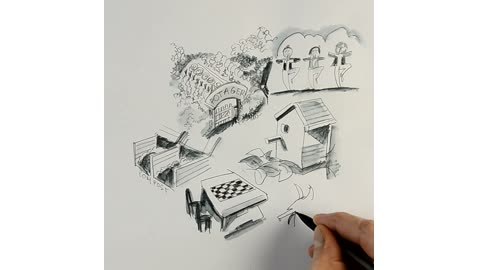
Here are examples. A collective vegetable garden, collective Qigong sessions, nest boxes, composts, chess tables, a Halloween float, an astronomical telescope and that kind of thing. But above all here, your idea, fresh, new.

And why is all this? To ultimately make Waterloo an even friendlier place. Thanks for watching this video!

Co-Tools — digitize production sheets

Co-Tools — digitize production sheets — Co-Tools

Today, when Loïc buys a chocolate bar, he scans it and instantly all the data is captured and used. Whereas in industry, very often, data is collected on a paper form.

Full synopsis

Full synopsis

Today, when Loïc buys a chocolate bar, he scans it and instantly all the data is captured and used. Whereas in industry, very often, data is collected on a paper form.

Amazing! Because as a result, there are a lot of errors. It's incomplete and difficult to read. Afterwards, you have to encode the data to understand it. It's long. Today, CoTools, from paper sheets, designs electronic sheets, for smartphones and tablets, which can be used directly by everyone.

This time, the data is validated. They are reliable. Documentation is available in the field and the system also collects all kinds of data, starting with time and position. Information is immediately accessible everywhere, which allows the team to intervene quickly.

These digital sheets developed by CoTools improve intelligence in production.

The electrification of transport

The electrification of transport — EIT Urban Mobility Academy

Before, we thought we would burn oil until the end of time. But that was before. Today, we know that we are on track to reach the warming threshold of 1.5°C by 2030.

Full synopsis

Full synopsis

Before, we thought we would burn oil until the end of time. But that was before. Today, we know that we are on track to reach the warming threshold of 1.5°C by 2030.

Cities cover only 3% of the earth's surface, but account for 70% of greenhouse gas emissions. They concentrate a large part of the problem. But they also concentrate the solutions, thanks to the numerous possibilities and the desire to change.

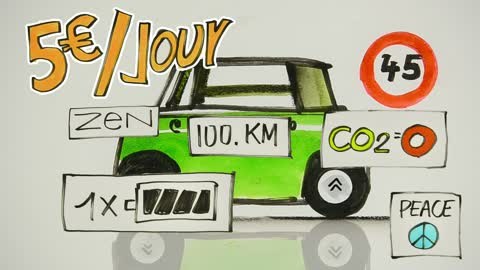
In transport, change will come through the transition to electric vehicles: the technology is already available, efficient and allows us to reduce our oil imports.

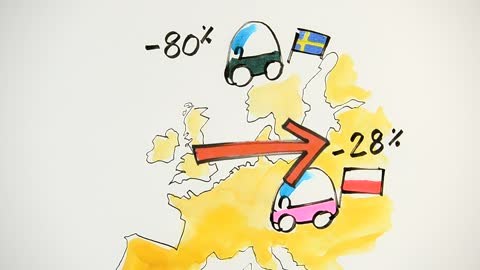
Taking into account its production and use, an electric car avoids 28% of carbon emissions in the worst case and 80% in the best case. These numbers can only get better.

In 2050, electricity will power 80% of engines. Since an electric car uses as much electricity as a household, demand will increase significantly. This electricity must come from renewable sources.

Infrastructure will change profoundly to adapt: ​​charging stations and smart networks, in which batteries will play an integral role in electricity storage.

The electrification of our society is a vast and fascinating subject. We have created an online course that you can take for free.

Autonomous vehicles

Autonomous vehicles — EIT Urban Mobility Academy

What we know today about autonomous vehicles is that we know nothing with certainty.

Full synopsis

Full synopsis

What we know today about autonomous vehicles is that we know nothing with certainty.

Cars appeared a hundred and twenty years ago, but it took us forty years to completely transition from horses to cars. The adoption of autonomous vehicles could take that long. It will happen gradually.

Innovators, urban planners, policymakers and consumers will all participate in this transformation. We need to ask ourselves whether autonomous vehicles are a good or bad thing.

We will have to re-examine the very notion of owning an individual car. Sharing should become a more interesting experience than owning.

In a world of autonomous vehicles, we can expect competition between the different possibilities: private vehicles, shared vehicles and public transport.

Let's not forget data either, which will play an essential role in the development of autonomous mobility.

All these questions are vast and fascinating. We have created a free online course.

GAL Culturalité — moving beyond car dependence

GAL Culturalité — moving beyond car dependence — GAL Culturalité

Before, the car was everything. Parents worried about their children because traffic was heavy. To reassure themselves, they dropped them off as close to school as possible. Some were almost ready to drive straight into the classroom.

Full synopsis

Full synopsis

Before, the car was everything. Parents worried about their children because traffic was heavy. To reassure themselves, they dropped them off as close to school as possible. Some were almost ready to drive straight into the classroom.

As a result, people felt less safe and the number of cars kept growing. But that was before. Today, we prefer active and shared forms of transport. There are plenty of different ways to travel.

We can even combine them: this one with that one, and another with another. Some also let us stop relying on Mum and Dad. Cycling, scooting, walking and much more. Driving alone, being the only person in your car, is an outdated habit.

We know it increases pollution and danger. There are new ways to get to school or work: bicycles, electric bicycles, cargo bikes, longtail bikes, scooters, electric scooters, electric unicycles, buses, trains and shared cars with their seats occupied. Walking buses and cycle buses help children get to school and offer an alternative to parents acting as taxi drivers.

By 2030, we must significantly reduce our CO₂ emissions. Moving beyond dependence on the car is part of the solution. These initiatives already exist: they are relevant, sensible and fun. The more people use them, the safer the roads and the areas around schools will feel.

Join in!

Mobility as a Service or MaaS

Mobility as a Service or MaaS — EIT Urban Mobility / UMX

What is MaaS? Mobility as a service involves integrating mobility services to reduce vehicle ownership, carbon emissions, traffic jams and parking space, for the benefit of public space.

Full synopsis

Full synopsis

What is MaaS? Mobility as a service involves integrating mobility services to reduce vehicle ownership, carbon emissions, traffic jams and parking space, for the benefit of public space.

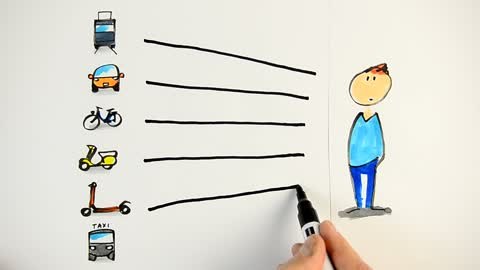
MaaS brings together public transport, car sharing, car rental, shared bicycles, mopeds and electric scooters, as well as taxis, on a single platform integrating reservation and payment.

How does it work? Users have easy access to services. They find what they need, book and pay for their trip from point A to point B. They can also find bundles or subscriptions that cover the needs of their entire household.

The application is the visible technical part of the iceberg. MaaS also means integrating services and building partnerships to form a value chain.

MaaS does not exist without attractive and accessible mobility services. By definition, they are very different, which makes it difficult to bring them together in one place.

MaaS is not the Netflix of mobility. Netflix brings together digital content, at low marginal cost, in a global market. MaaS is a local solution that combines very different physical services.

The objective is clear: to allow households to do without one or two private cars. Fewer cars mean less wasted space, healthier lifestyles and a growing service sector.

There are many examples of the positive effects of MaaS today. We've put this exciting information together into a free online course. Good discovery!
Brussels — unoccupied housing

Brussels — unoccupied housing — Bruxelles Logement / housing.brussels

In Brussels, there is a shortage of housing. However, some are empty. It’s crazy! This is precisely why there is legislation against unoccupied housing.

Full synopsis

Full synopsis

In Brussels, there is a shortage of housing. However, some are empty. It’s crazy! This is precisely why there is legislation against unoccupied housing.

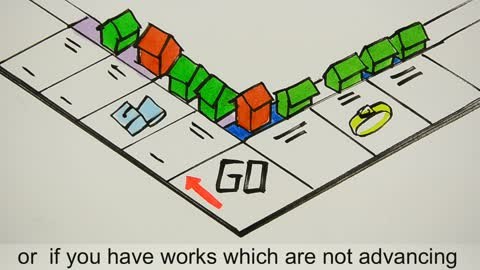
If you own a property, if your work is not progressing, if you are stuck in a complicated succession, if the floors above your business are empty or if you are simply waiting for a buyer: in all these cases, think about the time that passes.

As soon as the accommodation is empty, the countdown begins. A home cannot remain unoccupied for more than twelve months. Beyond that, heavy fines are expected.

Act before it’s too late: Brussels needs housing now.

Dysosmobacter — square version

Dysosmobacter — square version — Client to be confirmed

A car that comes off the production line is complete. She has all her pieces. It's true. A baby in the maternity ward too? No, that's not true.

Full synopsis

Full synopsis

A car that comes off the production line is complete. She has all her pieces. It's true. A baby in the maternity ward too? No, that's not true.

It is missing parts that will only arrive later: bacteria. They are very small, very numerous. Our body is home to a hundred thousand billion of them. They are alive and are not, strictly speaking, part of our person.

However, they live in us and form the equivalent of an additional organ: the microbiota. Very real, with a weight comparable to that of our brain, it is often called our second brain.

The microbiota is found in our intestines, rather towards the end, where it provides many vital functions: immune, digestive, physiological. We live in symbiosis with this stranger.

One hundred thousand billion bacteria, two-thirds of which are still unknown to us. Only recently have researchers begun to understand some things about this mysterious companion.

Professor Cani’s team is participating in this effort. She discovered a new bacteria: Dysosmobacter welbionis.

How do you discover a new bacteria? We simply collect a stool sample immediately after it leaves the intestine. Yes, in the laboratory. For this research, each member of the team gave a little of themselves.

A sample contains a lot of bacteria. If a bacteria were a card and the sample was a deck of cards, the pile would be this height. It is therefore necessary to divide, divide again, or dilute, to end up obtaining a single isolated bacteria. It is then cultivated to obtain the desired number of copies.

We then try to read its genome. If the bacteria were a car, the genome would be the vehicle's papers in the glove box: the bacteria's information.

Thanks to this object which resembles a small household appliance, a sequencer, a machine which revolutionizes science, we were able to very quickly read the code of its DNA. You know, this code written with only four letters.

Using computers and databases around the world, this code is then compared to all those that are already known. If it doesn't match anything known, bingo! This is the discovery of a new bacteria. We can give it a little Latin name and include it in the world directory.

It's good, but it's not the most extraordinary. What we're really looking for are bacteria that could be useful to humanity. This is the case of the one that interests us here.

It is also not that rare: 70% of the population has Dysosmobacter in the intestine, but it is almost absent in obese and diabetic people.

Surprising fact: by giving this bacteria to obese and diabetic mice, researchers improved their health. This is excellent news. This was the objective of this research, which is now bearing fruit.

Humans have always sought to expand their knowledge. Some go to Mars to analyze samples. But sometimes, it is much closer to us, in our stools, that we find knowledge that we hope will one day help humanity. THANKS.

Libres ensemble — free inquiry

Libres ensemble — free inquiry — Libres ensemble — laicite.be

In the DNA of secularism: free inquiry. Which does not mean: ‘I will take my exams’. That is not what it means.

Full synopsis

Text on screen — partial record

Partial transcription of the text shown on screen: a reliable audio transcript is not yet available for this film.

In the DNA of secularism: free inquiry. Which does not mean: ‘I will take my exams’. That is not what it means.

Intuition. Tradition. Perception. Myth. Beliefs. Examination. Knowledge. Free inquiry.

Free inquiry is a tool for freedom. Libres ensemble. LAICITE.BE.

Brussels — healthy housing

Brussels — healthy housing — Bruxelles Logement / housing.brussels

In Brussels, there is plenty of accommodation, but finding quality accommodation to rent can be difficult.

Full synopsis

Full synopsis

In Brussels, there is plenty of accommodation, but finding quality accommodation to rent can be difficult.

Some people rent anything: commercial premises converted into housing, or homes that are actually unsanitary.

If you are in this situation, you can report it to the Regional Housing Inspectorate. It handles complaints and carries out on-site inspections.

It can impose work or prohibit rentals, so that there is more and more decent housing in Brussels and less and less unsanitary housing.

Check with the Regional Housing Inspectorate.

United for Climate Justice — screening in New York

United for Climate Justice — screening in New York — FEPS (to be confirmed)

We must achieve this. And to do this, introduce an essential principle: the climate and justice are linked like the fingers of a hand. United for climate justice, in five points.

Full synopsis

Full synopsis

We must achieve this. And to do this, introduce an essential principle: the climate and justice are linked like the fingers of a hand. United for climate justice, in five points.

First point: money intended for the ecological development of the planet must finance the new model, not the old one. Is the end of fossil fuels announced? Good news! Let’s move forward to quickly build a carbon-free society.

Let's invest intelligently and put in place fair taxation, so that the right choice is also the easy choice.

Second point: big ideas most often come from small structures. Let’s give a boost to green SMEs.

Third point: decisions are made today by those who will no longer be there to benefit from them. This is absurd. It is right to give young people the right to check whether these decisions preserve their future. Let’s make room for youth councils for the environment.

Fourth point: climate action must be enshrined in law to protect environmental defenders, change makers, victims and people displaced by climate.

Fifth point: the environment is the most precious thing. And it doesn't belong to anyone. Nature takes its course. Some go against it for their profits. It's not fair.

What is fair is that humans and nature are moving in the same direction. If you refuse him, you are a dinosaur, and you will end up like him.

Climate change has started. The climate and justice are like the fingers of the hand. Action ! United for climate justice! Alright ! THANKS !

The ISO 16128 standard – Léa Nature Laboratoire version

The ISO 16128 standard – Léa Nature Laboratoire version — Léa Nature Laboratoire

The ISO 16128 standard explained it to those who don't particularly want the long version. Organic cosmetics is booming. For what ? Because today we all want healthy products, a planet and a life, like this and not like that.

Full synopsis

Full synopsis

The ISO 16128 standard explained it to those who don't particularly want the long version. Organic cosmetics is booming. For what ? Because today we all want healthy products, a planet and a life, like this and not like that.

Creating an ISO standard for organic and natural products seems like a good idea, with those who know, the experts, those who do it, the manufacturers of organic cosmetics. And those who would also like to do so, the conventional cosmetics manufacturers.

But be careful, ISO is not a label, it is a standard, not the same thing at all. The standard qualifies something, period, it is a tool. The label is there to certify, to guarantee that an idea, organic, natural, is really executed, without cheating.

The ISO standard defines what is organic and what is natural, but not what a so-called natural cosmetic actually contains. Thus, a cosmetic can display a percentage and speak of natural cosmetics, while incorporating ingredients suspected of being harmful to health.

That's nonsense, that's not a good idea at all. The risk with that is mixing on the shelves, true organic, not organic, a little organic, in short, mixing to make it illegible, so that doubt sets in. And let the good old days of bling bling marketing return.

The organic project is a commitment of people who love people, health and the planet. With the ISO standard, there is the risk that some will make sales by riding on naturalness. Like kids trying to get stuff into the cart.

We must remain vigilant. Marketing stuff is no longer what works, because frankly, it's no longer what we want. How to find the right products? Trust the labels and certifiers who do real certification work.

And for those who want the long version of the matter, it's here.

Euro-Climat-Solution — alternatives to fossil fuels

Euro-Climat-Solution — alternatives to fossil fuels — Euro-Climat-Solution SC

If this continues, we're definitely going to hit a wall. Change, quickly told and with solutions at the end. Initially, carbon energy was to keep warm or cook some local dishes with friends.

Full synopsis

Full synopsis

If this continues, we're definitely going to hit a wall. Change, quickly told and with solutions at the end. Initially, carbon energy was to keep warm or cook some local dishes with friends.

But then it became an energy frenzy. To be honest, we went completely crazy. We consumed always, always more. And we broke the climate. The change is now. 85% of those questioned asked for concrete actions.

We must turn the page on fossil fuels. If energy pollution is multi-sectoral, transport clearly takes pride of place. And it still increases while the others decrease. In transport, the lion's share is the road.

Before, the road was about normal people in cars and phenomena on cyclos. But that was before. Today, we are able to change this relationship. How ? With an error. In the past, we made a mistake.

We said to ourselves that we would improve traffic jam problems by improving logical routes. This is false. It's the opposite. The more you improve the roads, the more you attract cars. And the more traffic jams and CO2 you have.

Well, this is the error we are going to use. But this time to boost the bike. The more we build and improve cycle paths, the more bikes and soft mobility we have. And it works. Supporting figures. For 10 years now, Euromobility Solutions has been installing all kinds of improvements for soft mobility.

Screen equipment, sharing and security solutions. Access to soft mobility for more people and more situations. Oh, that's good. Stations connected to the sun, that says it all. But also cars that are not cars.

Because they don't ask for a license or to be 18 years old. They do not require insurance, no technical inspection, no certificate of conformity, no taxes, or plums. And which do not consume oil.

These are therefore mobility devices which are not cars, but which, for 5 euros per day, allow you to travel 100 kilometers in a single recharge without stress, without CO2 emissions and without risk for others.

And our catalog continues to grow. Ask us. You also want to participate in the end of the era of oil-eaters. Well, let's meet then.

THINGS Framework — work and automation

THINGS Framework — work and automation — Projet THINGS Framework

In your business, there are a number of repetitive tasks that take up time. And it's stupid because it can be automated. Before, automation concerned big companies. New, Things offers micro-solutions for small businesses.

Full synopsis

Full synopsis

In your business, there are a number of repetitive tasks that take up time. And it's stupid because it can be automated. Before, automation concerned big companies. New, Things offers micro-solutions for small businesses.

They are simple, quick and therefore inexpensive. What Things will allow you to do is easily save time by optimizing the team's work. An idea for automation? Contact André. Things, free up time, automate your work.

Distracted driving

Distracted driving — Bruxelles Mobilité

Our relationship with the smartphone has become, so to speak, addictive, which poses a road safety problem. The extreme distraction caused by this object represents a real danger, when driving a vehicle, but also on foot, on a bicycle, on a scooter.

Full synopsis

Full synopsis

Our relationship with the smartphone has become, so to speak, addictive, which poses a road safety problem. The extreme distraction caused by this object represents a real danger, when driving a vehicle, but also on foot, on a bicycle, on a scooter.

This is because in a car, stopping distance depends a lot on the driver's reaction time. A few seconds of inattention correspond to tens of meters traveled blindly. However, if a driver is usually exposed to different forms of successive distractions, visual, auditory, cognitive, physical, with a call or a message, all these forms of distractions arrive at once.

And that's a problem. According to studies, one in five people admit to making hands-free calls while driving. And yet, this triples the risk of disaster. 83% of Brussels residents consider it inexcusable to make phone calls while driving.

Rightly, the Highway Code provides for fines for this offense. Safety is everyone’s business. If you call someone who is driving, ask them to call you back. And as a passenger, don't let the driver stall when he's riding.

In conclusion, it's very simple, no message, no call is worth risking your skin and that of others.

Speed and road safety

Speed and road safety — Bruxelles Mobilité

As Galileo said, the movement is like nothing In fact, if you throw a ball vertically, the ball falls into your hand in the same way Whether you are stationary in your chair or at 280 km per hour in the TGV There is no difference, the movement is like nothing It is the change of speed which involves forces When we accelerate or when we decelerate An instantaneous deceleration, it is the crash And there, the movement is really not nothing Road victims, if they were still here, could tell you Instantaneous speed is that of an object in motion at a given moment A notion of physics Which should not be confused with travel time Which is a notion of mobility For example, in town, Anna by bike will go from point A to point B in 10 minutes Without exceeding the speed of 25 km per hour Noah by car will go from the same point A to the same point B in 14 minutes Sometimes driving at 50 km per hour But by also making stops quite often And by covering a greater distance He must also park his car and reach point B, their meeting place It is therefore not Noah, although he had the greatest instantaneous speed Who will arrive first On the other hand, in the event of an accident, it is he who would be the most dangerous The energy that a body possesses due to its speed is called kinetic energy When we catch the pole when we walk, what hurts is kinetic energy This energy does not increase linearly with the speed An apple plus an apple But like the square of the speed Thus, between 25 and 50 km per hour, there is not twice as much energy But four times more This is one of the reasons why Noah's stopping distance goes from simple to more than double Between 30 and 50 km per hour And that's not all The energy depends on the speed, but also on the mass If there is an accident between Anna and Noah Anna and his bike weigh 60 kg Noah and his car, 1200 kg That is to say 20 times more With twice the speed squared and 20 times more mass Noah carries 80 times more energy than Anna And the fatal icing on the cake In the event of a collision, Noah will hardly feel the effects of the accident While Anna will take the brunt of the bill In town, the car with its mass and speed Represents a danger larger than a bicycle or a scooter In the event of an accident Without providing real advantages in terms of travel time These calculations are based on the laws of physics And these will not change But what changes are the rules of mobility Driving at 30 or 50 km per hour in Brussels Does not affect the travel times of users But on the other hand greatly reduces the risk of accident The importance of injuries and the number of deaths Just look at the statistics A pedestrian hit by a car 30 km hour 4 times less likely to die than if hit at 50 km hour

Full synopsis

Full synopsis

As Galileo said, the movement is like nothing In fact, if you throw a ball vertically, the ball falls into your hand in the same way Whether you are stationary in your chair or at 280 km per hour in the TGV There is no difference, the movement is like nothing It is the change of speed which involves forces When we accelerate or when we decelerate An instantaneous deceleration, it is the crash And there, the movement is really not nothing Road victims, if they were still here, could tell you Instantaneous speed is that of an object in motion at a given moment A notion of physics Which should not be confused with travel time Which is a notion of mobility For example, in town, Anna by bike will go from point A to point B in 10 minutes Without exceeding the speed of 25 km per hour Noah by car will go from the same point A to the same point B in 14 minutes Sometimes driving at 50 km per hour But by also making stops quite often And by covering a greater distance He must also park his car and reach point B, their meeting place It is therefore not Noah, although he had the greatest instantaneous speed Who will arrive first On the other hand, in the event of an accident, it is he who would be the most dangerous The energy that a body possesses due to its speed is called kinetic energy When we catch the pole when we walk, what hurts is kinetic energy This energy does not increase linearly with the speed An apple plus an apple But like the square of the speed Thus, between 25 and 50 km per hour, there is not twice as much energy But four times more This is one of the reasons why Noah's stopping distance goes from simple to more than double Between 30 and 50 km per hour And that's not all The energy depends on the speed, but also on the mass If there is an accident between Anna and Noah Anna and his bike weigh 60 kg Noah and his car, 1200 kg That is to say 20 times more With twice the speed squared and 20 times more mass Noah carries 80 times more energy than Anna And the fatal icing on the cake In the event of a collision, Noah will hardly feel the effects of the accident While Anna will take the brunt of the bill In town, the car with its mass and speed Represents a danger larger than a bicycle or a scooter In the event of an accident Without providing real advantages in terms of travel time These calculations are based on the laws of physics And these will not change But what changes are the rules of mobility Driving at 30 or 50 km per hour in Brussels Does not affect the travel times of users But on the other hand greatly reduces the risk of accident The importance of injuries and the number of deaths Just look at the statistics A pedestrian hit by a car 30 km hour 4 times less likely to die than if hit at 50 km hour

Co-Tools — from prototype to industry 4.0

Co-Tools — from prototype to industry 4.0 — Co-Tools

In the land of blablas and yakas, everyone has ideas. We talk, we talk, we talk a lot. And then, further away, there is another country, that of makers. That's where the industry is. Olivier is an engineer. He is very interested in new technologies.

Full synopsis

Full synopsis

In the land of blablas and yakas, everyone has ideas. We talk, we talk, we talk a lot. And then, further away, there is another country, that of makers. That's where the industry is. Olivier is an engineer. He is very interested in new technologies.

It gives him lots of ideas. But when he has one, he prefers not to talk about it too much and instead to test it. For this, he contacted André to have access to CoTools' skills in mechanics, electronics and IT.

With them and with simple components, it is already industry 4.0. And it works! This prototype brings colleagues together around a demonstration with proven results. And as a result, everything moves much faster than with the blablas yakas.

Today, in industry, counting, localization and traceability are optimized with new technologies. Are we talking about it?

Co-Tools — industry 4.0 and connected objects

Co-Tools — industry 4.0 and connected objects — Co-Tools

A cow. An object doesn’t speak. In any case, not a language that we understand. But that was before. Today, cows speak with their ears. Objects also speak from the moment they are tagged.

Full synopsis

Full synopsis

A cow. An object doesn’t speak. In any case, not a language that we understand. But that was before. Today, cows speak with their ears. Objects also speak from the moment they are tagged.

They say simple or very specific things. They communicate based on the sensors that are installed. In the ear of an engineer, who is never far from his analysis center, this will allow a lot of things.

With objects that speak, comes the era of Digital Lean Industry. It's what ? Lean is a philosophy of optimization. Optimize, always more! We saw it in the first, second and third industrial generation.

Today, we are talking about the fourth generation. And this time, the king is information. In 2016, André, Philippe, Bruno came together to create Co-Tools. A team of competent, efficient engineers and computer scientists who connect objects and develop applications to provide you with clear, intuitive and instantaneous information.

An objective perception based on data, which allows the right decisions to be made in real time. Data that will improve value stream mapping. Optimize production, optimize the supply chain, optimize stocks, quality management, tracking of delivered parts, unique information and documentation for each part and display of all information, all the time and everywhere.

Shall we meet to talk about it?

Hydrogen and mobility

Hydrogen and mobility — EIT Urban Mobility / UMX

We've been hearing a lot about hydrogen lately. It seems capable of storing energy and decarbonizing transport. And there is no shortage of it: it is the most abundant element in the Universe.

Full synopsis

Full synopsis

We've been hearing a lot about hydrogen lately. It seems capable of storing energy and decarbonizing transport. And there is no shortage of it: it is the most abundant element in the Universe.

On Earth, however, it is not found in its pure form, H₂, but associated with other elements in hydrocarbons and in water. It must therefore be separated from other molecules to produce it.

Herein lies the problem: this process is not always environmentally friendly. Today, hydrogen is mainly used in industry. It is produced largely from fossil fuels, which emit a lot of CO₂.

Its production is currently responsible for 830 million tonnes of CO₂ per year.

But hydrogen can also be produced with renewable energies, such as wind and hydropower. This is called green hydrogen. It is produced by electrolysis: electricity transforms water into hydrogen.

Where will it be used? In mobility, it can be used for vehicles with high energy needs, such as buses and taxis.

In a hydrogen vehicle, gas is stored and then converted into electricity by a fuel cell. It is therefore, basically, an electric vehicle. But unlike a battery, a hydrogen tank can be filled quickly.

The downside is that fuel cells and electrolysis naturally result in significant energy losses. Compared to batteries, hydrogen is therefore less efficient, but it stores more energy, offers more autonomy and recharges much faster.

Hydrogen faces many challenges and is struggling to establish itself. Simple media hype or hope for sustainable urban mobility? We've created a free online course for you to make up your own mind. Good discovery!
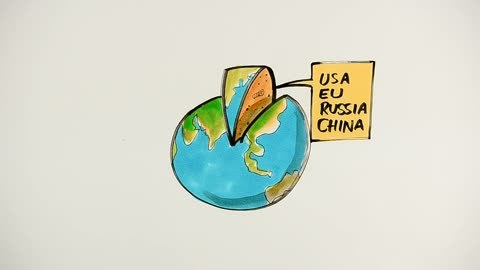
Mestdagh — working better together

Mestdagh — working better together — Mestdagh

Together, forward, it's now. To embody Carrefour's local, authentic and modern roots, we are going to think about how to work better together. With the work of a few volunteers from the teams, we defined a common ambition.

Full synopsis

Full synopsis

Together, forward, it's now. To embody Carrefour's local, authentic and modern roots, we are going to think about how to work better together. With the work of a few volunteers from the teams, we defined a common ambition.

Together, with pride, we act as efficient traders for our customers. Together, our strength, pride, our profession. Let's act, our independence, efficient trader, place the customer at the center. And how can we put this ambition into practice in our everyday work?

Thanks to four attitudes. Accountability, I am solution oriented and I assume my responsibilities and commitments. Determination, I see things through to the end. With the customer at the center, I consider each person expressing a need as a customer.

Efficiency, I make things simple and agile. These four attitudes are there to allow everyone to take ownership of this new dynamic. Each team will participate in small groups to reflect on their behavior.

These new ways of collaborating bring more engagement. And that pulls everyone up.

Alcohol, drugs and driving

Alcohol, drugs and driving — Bruxelles Mobilité

Mobility is questions that revolve around “how we move”. It can be divided into two categories, passive mobility and responsible mobility. For passive mobility, taxi, bus, tram, metro, train, boat, plane, you let yourself be driven, which does not require any particular skills.

Full synopsis

Full synopsis

Mobility is questions that revolve around “how we move”. It can be divided into two categories, passive mobility and responsible mobility. For passive mobility, taxi, bus, tram, metro, train, boat, plane, you let yourself be driven, which does not require any particular skills.

It is the driver who is responsible. Whereas for responsible mobility, skateboard, scooter, monowheel, bicycle, car, scooter, motorcycle, van, truck, each driver is individually responsible for his behavior and the risk linked to it.

So that it wouldn't be total chaos, we invented the highway code. An important point for road safety is the consumption of substances that impair brain function. Alcohol, cannabis, amphetamines, cocaine, laughing gas, everything that alters the brain and which is not at all, not at all, compatible with responsible mobility.

It’s an impassable red line. The position of the driver who has consumed these substances is therefore that of a passenger. And as a passenger of a driver who has consumed alcohol or drugs, you take the same risks as him.

The only reaction should be an irrevocable name, do not get in the car with him and advise him not to drive. If the party is a joyful affair, driving in fog is a very serious matter, with heavy penalties, but above all serious and fatal accidents.

This is why we must clearly draw a red line between alcohol or drug consumption and driving.

Superblocks

Superblocks — EIT Urban Mobility / UMX

Imagine a neighborhood without cars, where children play and parents talk. You can find them in Barcelona. They are called superblocks.

Full synopsis

Full synopsis

Imagine a neighborhood without cars, where children play and parents talk. You can find them in Barcelona. They are called superblocks.

How do they work? Traffic is diverted outside. Inside, a peaceful area welcomes cyclists, pedestrians and social life. Here, people have priority over cars.

Only local residents' vehicles and deliveries are allowed inside, with a speed limit of fifteen kilometers per hour.

Superblocks offer more public space, less pollution and more safety. Above all, they allow a better quality of life: conversations, sport, culture, shops, play spaces and neighborhood life.

And it works! Eighteen months after their implementation, most people say they are satisfied with the results.
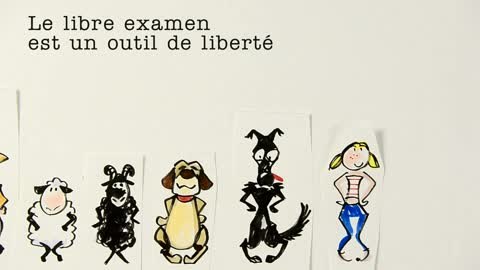
Superblocks are a thought-provoking topic. We've created a free online course for you to find out.

IS2H4C — European circularity hubs

IS2H4C — European circularity hubs — Projet IS2H4C

In the past, we sought to produce more, consume more and earn more money. We used as many resources as possible, consumed them quickly, then threw them away before starting again. This was the principle of the linear economy.

Full synopsis

Full synopsis

In the past, we sought to produce more, consume more and earn more money. We used as many resources as possible, consumed them quickly, then threw them away before starting again. This was the principle of the linear economy.

But times have changed. Today, progress is being redefined. The era of the circular economy has begun. We want to reduce resource use and energy consumption, extend the life of products and recycle waste.

To achieve these objectives, the IS2H4C project was created to develop large-scale regional circularity hubs across Europe.

These hubs connect businesses to surrounding communities, transforming one company’s waste into another’s resources. It is industrial and urban symbiosis: allowing European industrial zones to integrate waste flows and optimize their use of energy.

IS2H4C creates circularity hubs and networks across Europe. The project promotes the circular economy and industrial and urban networks. It emphasizes social acceptance and viable economic models, supporting innovative solutions with high added value.

These technologies will be deployed on a larger scale in the clusters, with the support of an IT platform.

Our main objectives: to move technologies from TRL maturity levels 3 to 5 to TRL levels 7 to 9. For example, produce biogas and e-methanol to replace fossil fuels, reduce material use by 10%, energy consumption by 20% and carbon emissions by 30%.

IS2H4C transforms industries to serve a resilient circular economy, in line with the European ambition for a sustainable future.

Formats

1 minute · 5 business days
QUIDOS TALK

Explain a concept, launch a product or raise awareness in 60 seconds. Format optimised for social media, websites and presentations. Script, storyboard and voiceover included. Deliverables: HD MP4 + SRT subtitles, all rights transferred.

2–3 minutes · 10 business days
QUIDOS STORY

For subjects that require complete narrative: multi-step processes, annual reports, institutional presentations. Story structured in acts, bespoke characters and visual universe. Multilingual versions available.

They chose QUIDOS

67 Belgian and European organisations have entrusted one or more films to QUIDOS since 2010.

Agence Alter · Agoria · API-BW · APB · BNP Paribas Foundation · bpost · Province of Brabant Wallon · Bruxelles Mobilité · CanSat Belgium · CARODEC · CCIA · Centre d'Action Laïque · Child Focus · CityLab Brussels · Co-Tools · Coface · Copernicus · Cosmébio · Daikin · daredo · DNS Belgium · EMS · EPHE · EQUASS · Espaces Mobilités · FARO · FEPS · F. Formations · FFPE · FixCopyright · Flanders · Fondation pour l'Enseignement · GASAP · HIPPEROS · Hospice Général · IBSR · Inclusion Europe · ING Bank · de Duve Institute · ISOSL · IUCr / UNESCO · LIEU · LloydsPharma · Logement Bruxellois · MaestroMobile · Mestdagh · MLOZ · Mobil 2040 · Pharmacie · Prince EA · RTBF · Schola · SO'BiO étic · SPIE · STIB-MIVB · The Greens · Thomas More · UCB Pharma · UCLouvain · ULB · University of Namur · UTick · City of Brussels · Wallonia · Waterloo · Will Pharma · Yapaka

How it works

D1
Brief and brainstorm

A 30-minute call to understand your message, target audience and deadline. QUIDOS never starts without having grasped the essentials.

D2
Writing the synopsis

The screenplay is written, structured into acts, with the film's central idea. This is the creative phase — the moment the abstract becomes narrative.

D3
Synopsis presentation

The synopsis is presented to you by the person who wrote it. You validate or redirect. In practice, this goes smoothly.

D4
Artist's workshop

Storyboard drawing, voiceover recording, frame-by-frame animation, editing, sound effects.

D5
Delivery and fine-tuning

Final film presentation with one day of revisions included. HD MP4 + SRT files, all rights transferred. Ready to publish.

Frequently asked questions

What does an animation video cost in Belgium?

QUIDOS rates adapt to the format and institutional budget. A QUIDOS TALK (1 minute) is designed for the standard budgets of NGOs, universities and public bodies. A QUIDOS STORY (2–3 minutes) suits more ambitious projects. Contact us for a personalised quote within 24h: grimonprez.edition@gmail.com. Projects funded by European grants (H2020, Horizon Europe) can benefit from adapted pricing.

How quickly is a QUIDOS delivered?

A QUIDOS TALK is delivered in 5 business days from storyboard approval. A QUIDOS STORY requires 10 business days. These timelines include two rounds of revisions. For urgent needs — imminent conference, campaign launch — an express timeline is available upon request.

Do you work in Dutch and French?

Yes. QUIDOS produces animation videos in English, French and Dutch — the three working languages of Belgium and European institutions. Multilingual versions of the same animation are offered at reduced rates.

Who owns the rights to the delivered video?

You do. All rights are transferred upon delivery, without restriction or royalties. The video belongs entirely to you — web, TV, conference, intranet, social media. No retention clause, no exploitation fees.

Does QUIDOS work with European institutions?

Yes. QUIDOS has been based in Brussels since 2010 and has produced animations for H2020 projects, the European Parliament, and NGO partners of the Commission. Complex institutional communication is a QUIDOS speciality.

grimonprez.edition@gmail.com · +32 485 29 20 94